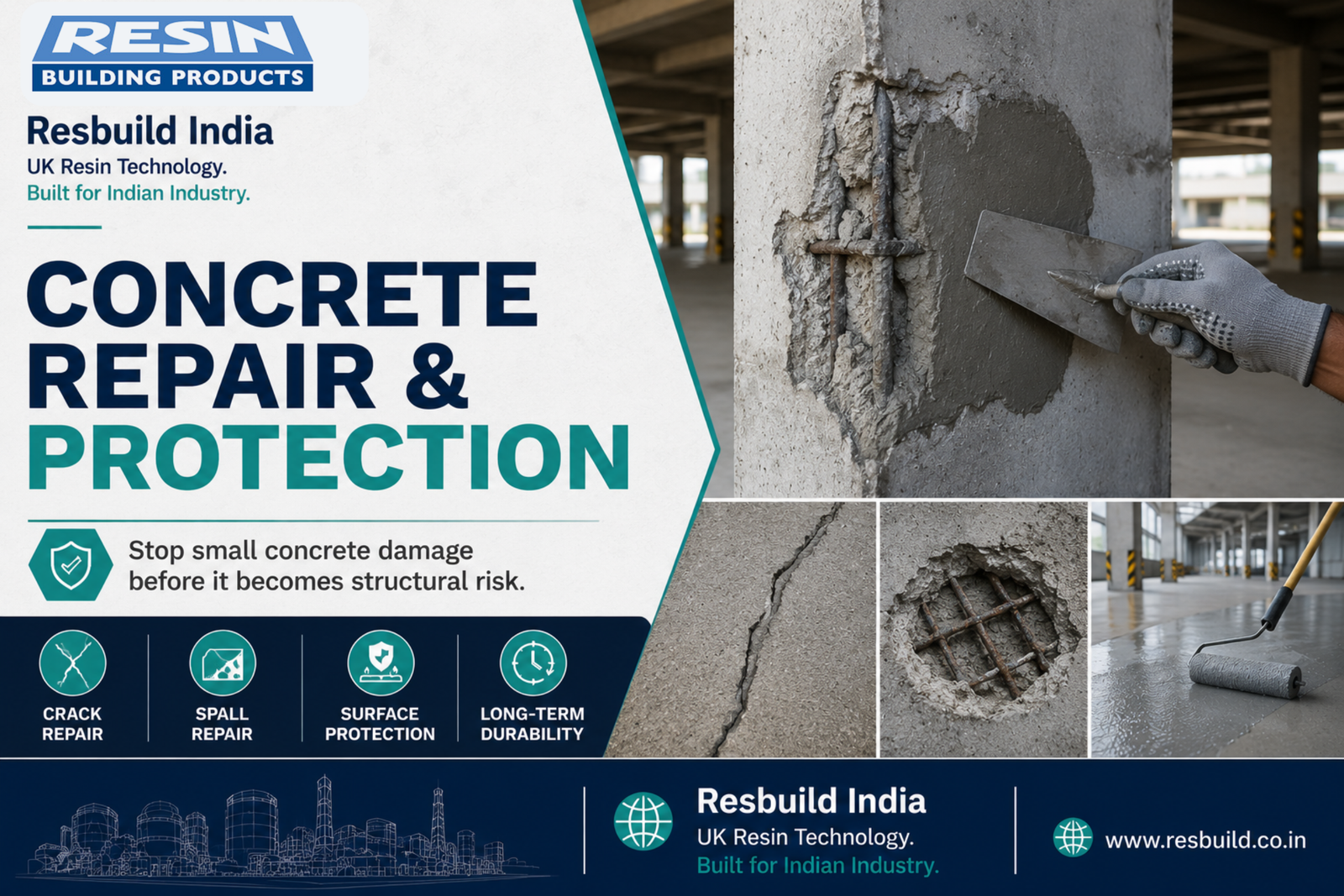
Small concrete damage is often ignored at the early stage because it may look like a minor surface issue. A small crack, edge break, spalled patch or damaged industrial floor area may not appear urgent during daily operations.
But in industrial, commercial and infrastructure environments, small concrete defects can spread quickly when exposed to water, load, movement, abrasion, chemicals and reinforcement corrosion. What starts as a small repair requirement can later become a larger structural or asset protection issue.
That is why concrete repair should not be treated as cosmetic patching. It should be handled as a system-based repair and protection activity.
Resbuild Concrete Repair & Protection supports contractors, consultants and plant maintenance teams with technical guidance for restoring damaged concrete, cracks, surface defects and industrial floor damage using the right repair and protection approach.
Why Small Concrete Damage Should Not Be Ignored
Concrete structures and floors are continuously exposed to different service conditions. In factories, warehouses, parking decks, industrial buildings, chemical plants and infrastructure areas, concrete faces traffic movement, water ingress, impact, vibration, thermal movement and chemical exposure.
Small damage can become serious when the root cause is not addressed.
Common early warning signs include:
- Hairline cracks
- Surface cracks
- Spalling concrete
- Hollow or weak surface patches
- Broken floor edges
- Exposed reinforcement
- Dusting concrete surface
- Delamination
- Water seepage marks
- Chemical attack stains
- Impact damage near machinery or traffic routes
These signs should be inspected properly before choosing a repair material. If the wrong repair method is used, the patch may fail and the damage may return.
Common Causes of Concrete Damage
Before selecting a repair mortar or protection system, the cause of damage must be identified. Concrete damage can occur for many reasons, and each cause may require a different repair approach.
1. Water Ingress
Water entering through cracks, joints or porous concrete can accelerate deterioration. In reinforced concrete, water ingress can increase the risk of reinforcement corrosion.
2. Reinforcement Corrosion
When steel reinforcement corrodes, it expands and creates pressure inside the concrete. This can lead to cracking, spalling and loss of cover concrete.
3. Carbonation
Carbonation can reduce concrete alkalinity and increase the risk of reinforcement corrosion over time, especially in exposed concrete structures.
4. Chemical Exposure
Industrial floors and concrete surfaces may be exposed to oils, acids, alkalis, cleaning chemicals or process fluids. Without suitable protection, chemical exposure can weaken the surface.
5. Abrasion and Traffic Movement
Forklifts, pallet movement, trolleys and heavy industrial traffic can damage concrete surfaces and create floor defects.
6. Poor Surface Preparation or Previous Repair Failure
Many concrete repairs fail because the damaged area was not properly prepared before application. Dust, weak concrete, contamination and loose particles can reduce bonding.
7. Structural Movement and Vibration
Machine foundations, industrial slabs and structural joints may experience vibration or movement. Repair materials must be selected according to the actual site condition.
Why Concrete Repair Needs a System-Based Approach
A strong repair is not only about filling a damaged area. A complete concrete repair approach should consider diagnosis, surface preparation, bonding, repair mortar selection, curing and surface protection.
A proper repair system should include:
- Inspection of damage
Identify crack type, spalling depth, surface weakness, corrosion risk and exposure condition. - Root cause diagnosis
Understand whether the damage is caused by water, chemicals, corrosion, traffic, impact or poor concrete quality. - Surface preparation
Remove loose concrete, dust, laitance, oil, contamination and weak substrate. - Correct repair material selection
Choose suitable repair mortar, bonding system or protection material based on application thickness and exposure. - Application control
Follow the correct mixing, placement, finishing and curing process. - Protection after repair
Apply protective coating, waterproofing, sealer or floor system where required to reduce future damage.
Role of Repair Mortars in Concrete Repair
Repair mortars are used to rebuild damaged concrete, fill spalled areas, restore profiles and improve surface integrity. The selection of repair mortar depends on the depth of repair, bonding requirement, exposure level and application method.
Important repair mortar selection factors include:
- Bond strength
- Shrinkage control
- Application thickness
- Workability
- Mechanical strength
- Compatibility with concrete
- Curing requirement
- Exposure to moisture or chemicals
- Final protective coating requirement
For industrial floors and structural repair areas, repair mortar should not be selected only based on price. The product must match the actual performance requirement.
When Protective Coatings Are Needed After Repair
Many concrete repair areas require protection after repair. This is especially important for exposed, industrial or chemically affected surfaces.
Protective coatings can help reduce future deterioration caused by:
- Carbonation
- Moisture ingress
- Chemical exposure
- Surface contamination
- Weathering
- Abrasion
- Repeated industrial use
Concrete repair without protection may solve the visible defect but may not stop the exposure condition that caused the damage.
For example, a parking deck repair may require anti-carbonation coating, waterproofing support or anti-slip protection. A chemical plant repair may require chemical-resistant protective coating. An industrial floor repair may require a resin flooring or surface protection system depending on traffic and exposure.
Industrial Floor Damage: Why Early Repair Matters
Industrial floors are critical working surfaces. Damage in these areas can affect movement, safety, cleaning, productivity and equipment operation.
Small floor damage should be repaired early when it appears in:
- Forklift movement areas
- Loading bays
- Production floors
- Warehouse aisles
- Machine areas
- Chemical exposure zones
- Food and pharma processing areas
- Maintenance workshops
- Parking and podium areas
Timely repair helps reduce the risk of wider surface breakdown and repeated maintenance shutdowns.
How Resbuild Concrete Repair & Protection Supports Projects
Resbuild Concrete Repair & Protection helps restore damaged concrete, cracks and industrial floor defects with system-based repair and protection guidance.
Resbuild India supports contractors, consultants and maintenance teams in selecting the right system based on:
- Type of concrete damage
- Crack or spall condition
- Surface preparation requirement
- Exposure to water or chemicals
- Traffic and load condition
- Repair thickness
- Curing and application requirement
- Need for protective coating after repair
The goal is to provide a technical repair solution, not just a temporary patch.
Application Areas
Resbuild Concrete Repair & Protection systems are relevant for:
- Industrial floors
- Factory maintenance areas
- Warehouses
- Parking decks
- Podiums
- Basements
- Chemical plants
- Infrastructure projects
- External concrete structures
- Columns, beams and slabs
- Utility and service areas
- Damaged concrete surfaces
Practical Checklist Before Starting Concrete Repair
Before starting concrete repair work, contractors and asset owners should check:
- What caused the damage?
- Is there active water ingress?
- Is reinforcement corrosion visible?
- Is the surface weak or contaminated?
- What is the required repair thickness?
- Will the repaired area face traffic or chemicals?
- Does the area need waterproofing or protective coating?
- Is curing required after repair?
- Is the repair system suitable for long-term exposure?
This checklist helps avoid wrong product selection and repeated repair failure.
Conclusion
Small concrete damage should not be ignored. Cracks, spalling, damaged industrial floors and surface defects can spread when exposed to load, water, chemicals, traffic and corrosion risk.
The right approach is to diagnose the cause, prepare the surface properly, select the correct repair mortar and protect the repaired concrete where required.
Resbuild Concrete Repair & Protection provides technical system guidance for industrial, commercial and infrastructure concrete repair applications.
For TDS / SDS or technical guidance, visit:
https://resbuild.co.in/resbuild-concrete-repair
Contact: +91 98796 13029
Resbuild India
UK Resin Technology. Built for Indian Industry.
www.resbuild.co.in
FAQs
1. Why should small concrete cracks be repaired early?
Small cracks can allow water ingress, chemical attack and surface deterioration. Early repair helps reduce the risk of wider damage and costly rehabilitation.
2. What causes concrete spalling?
Concrete spalling can occur due to reinforcement corrosion, water ingress, carbonation, freeze-thaw exposure, impact damage or poor concrete quality.
3. Is repair mortar enough for concrete repair?
Repair mortar may restore the damaged area, but some surfaces also need protective coating, waterproofing or surface treatment depending on exposure.
4. Where is Resbuild Concrete Repair & Protection used?
It is used for industrial floors, damaged concrete surfaces, parking areas, podiums, infrastructure repair, factory maintenance areas and structural repair work.
5. How do I select the right concrete repair system?
Selection depends on damage type, surface condition, exposure, repair thickness, traffic load and whether further protection is required. Technical guidance is recommended.