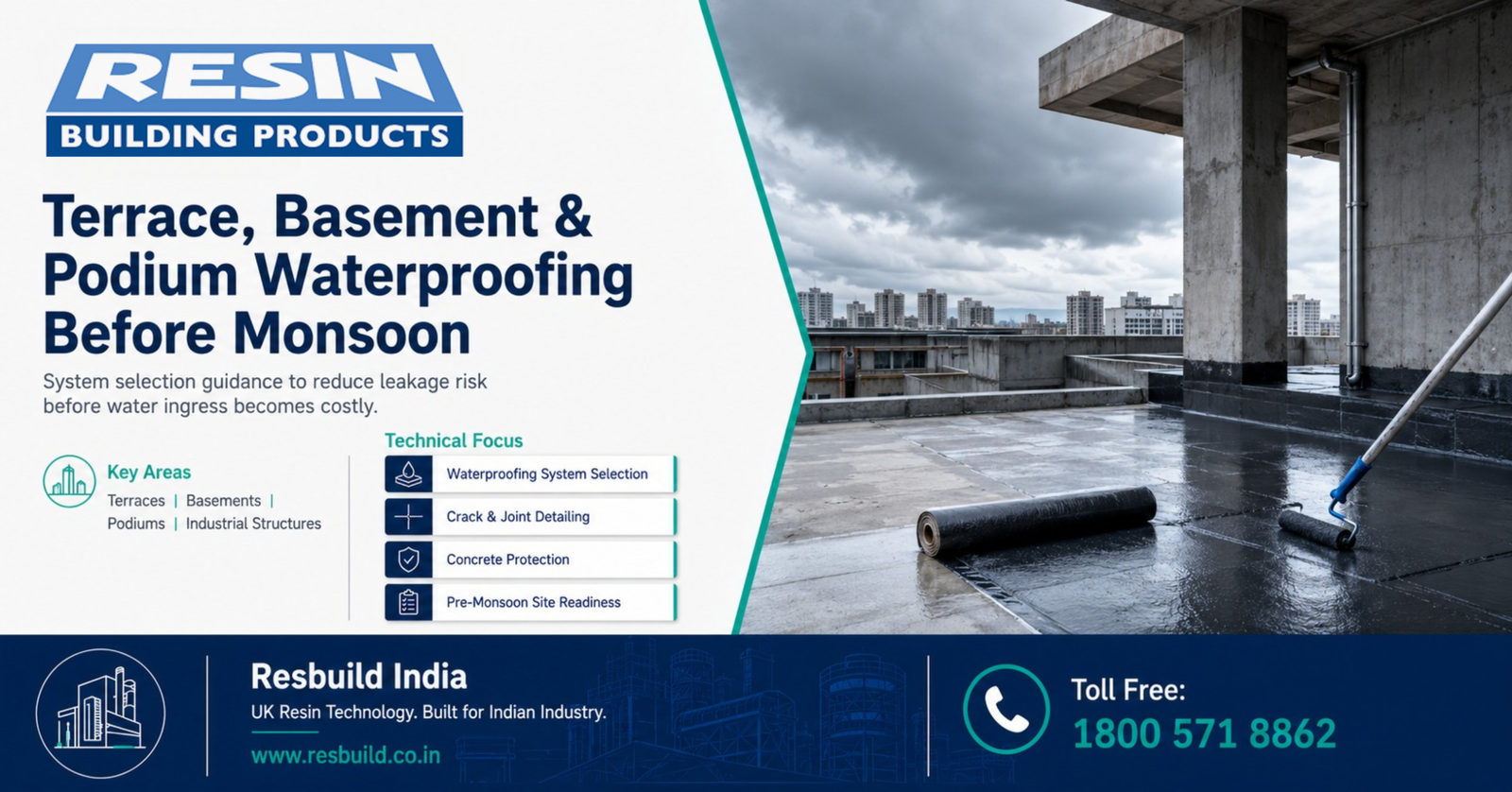
Terrace, Podium and Basement Waterproofing: Product Selection Guide
Waterproofing failure is one of the most common causes of building deterioration, repeated repair work and long-term maintenance cost. Terraces, basements and podium slabs are especially sensitive because each area faces a different type of water exposure, surface movement and protection requirement.
Many waterproofing failures happen because the same product is used across different areas without evaluating the site condition. A terrace exposed to UV, rainfall and thermal movement does not need the same approach as a basement wall facing soil-side water pressure. Similarly, a podium slab may require waterproofing that can handle water exposure, movement, protection layers and traffic-related service conditions.
This is why waterproofing product selection should be handled as a technical system decision, not as a basic coating activity.
Resbuild Waterproofing Systems are designed for terraces, basements, podiums, roofs, walls and industrial concrete structures where long-term moisture protection, surface preparation and application guidance are important.
Why Basement Waterproofing System Selection Matters
Waterproofing is not only about stopping visible leakage. It is about protecting concrete from water ingress, corrosion risk, dampness, coating failure, surface deterioration and repeated repair complaints.
The wrong waterproofing system may create issues such as:
• Leakage after monsoon
• Blistering or peeling of coating
• Damp patches on walls or ceilings
• Water seepage through cracks and joints
• Failure around pipe penetrations
• Damage during screed or tile work
• Repeated repair and customer complaints
To avoid these issues, project teams must first identify the water exposure type, surface condition and final use of the area.
1. Terrace Waterproofing Product Selection
Terraces face direct rainwater, UV exposure, thermal movement and water stagnation. Even small cracks can allow water to enter the slab and create leakage below.
Before selecting a terrace waterproofing system, check:
• Surface strength and cleanliness
• Slope and drainage condition
• Crack width and movement
• Old coating condition
• Parapet wall junctions
• Pipe penetrations and rainwater outlets
• UV exposure
• Final protection requirement
For terraces, liquid-applied waterproofing systems are often preferred because they can create a seamless membrane over the surface when applied correctly. Resbuild Waterproofing Systems include liquid-applied membranes, flexible acrylic waterproofing and polymer coatings for long-term protection of exposed surfaces. (resbuild.co.in)
A terrace system should not be selected only by coverage rate or price. It should be selected based on surface movement, exposure, application thickness and protection requirement.
2. Basement Waterproofing Product Selection
Basements are more technically demanding because water can enter from the soil side, through concrete cracks, honeycombing, construction joints, pipe entries and retaining walls.
Basement leakage may occur due to:
• Hydrostatic pressure
• Weak concrete zones
• Construction joints
• Cracks in retaining walls
• Poor external waterproofing protection
• Pipe penetration leakage
• Honeycombed concrete
• Water table variation
Basement waterproofing selection should consider whether the treatment is being done on the positive side or negative side. Positive-side waterproofing is applied on the water-facing side, while negative-side waterproofing is applied from the inside surface when external access is not possible.
Before product selection, project teams should assess:
• Water pressure condition
• Substrate soundness
• Crack treatment requirement
• Construction joint detailing
• Drainage provision
• Protection board requirement
• Backfilling condition
• Repair requirement before waterproofing
A basement system should be selected after understanding the actual source and pressure of water ingress. Temporary surface coating without crack and joint treatment may not solve the problem long-term.
3. Podium Waterproofing Product Selection
Podium slabs are challenging because they often combine waterproofing, movement, drainage, landscaping, parking, service loads and protection layers.
Common podium waterproofing problems include:
• Leakage into parking areas or lower floors
• Failure near drain outlets
• Water stagnation below landscaping layers
• Cracking due to movement
• Damage during screed or tile installation
• Membrane puncture during civil work
• Poor detailing at vertical junctions
Before selecting a podium waterproofing system, check:
• Final use: parking, landscape, open area or service zone
• Surface slope and drainage design
• Movement joints
• Protection layer requirement
• Expected traffic or load
• Root exposure in landscape areas
• Joint and outlet detailing
• Membrane damage risk during finishing work
Podium waterproofing should be treated as a full system: substrate repair, crack treatment, primer or bonding layer, waterproofing membrane, detailing and protection layer. Skipping any step can reduce system performance.
Key Technical Factors Before Selecting Any Waterproofing System
1. Surface Preparation
A waterproofing system is only as strong as the surface below it. Dust, laitance, loose particles, oil, grease, weak plaster and old failed coatings should be removed before application.
2. Crack and Joint Treatment
Cracks, construction joints, expansion joints and pipe penetrations must be treated before the main waterproofing layer. These are the most common leakage points.
3. Moisture Condition
Some systems require dry surfaces, while others may tolerate damp conditions depending on product chemistry. Always follow technical data sheet guidance.
4. Application Thickness
Too thin or uneven application can lead to weak spots. Waterproofing should be applied as per recommended coverage, coat thickness and recoat timing.
5. Protection Layer
Waterproofing layers may require screed, tiles, protection board or coating protection depending on traffic and exposure. A good membrane can still fail if damaged during civil work.
6. Site Detailing
Corners, parapet junctions, rainwater outlets, pipe penetrations and upstands require special attention. These details often decide long-term waterproofing performance.
Where Resbuild Waterproofing Systems Help
Resbuild Waterproofing Systems support waterproofing requirements for:
• Terraces
• Basements
• Podiums
• Roofs
• Walls
• Water-retaining structures
• Industrial concrete structures
• Moisture-exposed areas
Resbuild India offers waterproofing membranes and coatings for roofs, basements, podiums, walls and water-retaining structures, including flexible acrylic waterproofing, liquid-applied membranes, polymer coatings and UV-resistant solutions. (resbuild.co.in)
Resbuild India also brings UK-engineered resin, repair and waterproofing systems adapted for Indian industrial and infrastructure conditions. Its product portfolio includes industrial flooring, concrete repair, waterproofing, engineering grouts, protective coatings and surface treatments. (resbuild.co.in)
Common Waterproofing Mistakes to Avoid
• Applying waterproofing on dusty or weak surfaces
• Ignoring cracks and joints
• Not checking slope and drainage
• Using one product for all areas
• Applying insufficient coat thickness
• Not protecting the membrane after application
• Skipping primer where required
• Treating basement leakage without understanding water pressure
• Damaging waterproofing during screed, tile or backfilling work
• Choosing only by price instead of exposure condition
Conclusion
Terrace, basement and podium waterproofing require different technical approaches. Terraces need UV, rain and thermal movement resistance. Basements need water pressure and joint detailing assessment. Podiums need movement, protection layer and drainage-focused system selection.
The right waterproofing system should be selected after checking the surface condition, crack treatment requirement, exposure type, drainage, application thickness and protection method.
Resbuild Waterproofing Systems provide technical waterproofing support for terraces, basements, podiums and industrial structures where long-term performance and correct system selection are important.
CTA Section
Need help selecting the right waterproofing system for your project?
📞 Contact Resbuild India: 1800 571 8862
🌐 Visit: https://resbuild.co.in/resbuild-waterproofing
Request TDS/SDS, site consultation or technical product guidance.
Resbuild India
UK Resin Technology. Built for Indian Industry.
FAQs
1. Which waterproofing system is suitable for terraces?
Terraces usually need a flexible, seamless waterproofing system that can handle rainfall, UV exposure, surface movement and water stagnation. Product selection should be based on surface condition, cracks, slope and protection requirement.
2. Is basement waterproofing different from terrace waterproofing?
Yes. Basement waterproofing must consider water pressure, retaining wall condition, soil-side exposure, construction joints and pipe penetrations. Terrace waterproofing mainly deals with rainfall, UV exposure and thermal movement.
3. Why does podium waterproofing fail?
Podium waterproofing may fail due to poor slope, membrane puncture, weak detailing at joints, water stagnation, movement cracks or damage during finishing work.
4. Can one waterproofing product be used for terrace, basement and podium?
Not always. Each area has different exposure conditions. A system-based selection is required to avoid premature failure.
5. Does Resbuild India provide waterproofing product guidance?
Yes. Resbuild India provides technical guidance for selecting suitable waterproofing systems for terraces, basements, podiums and industrial structures.