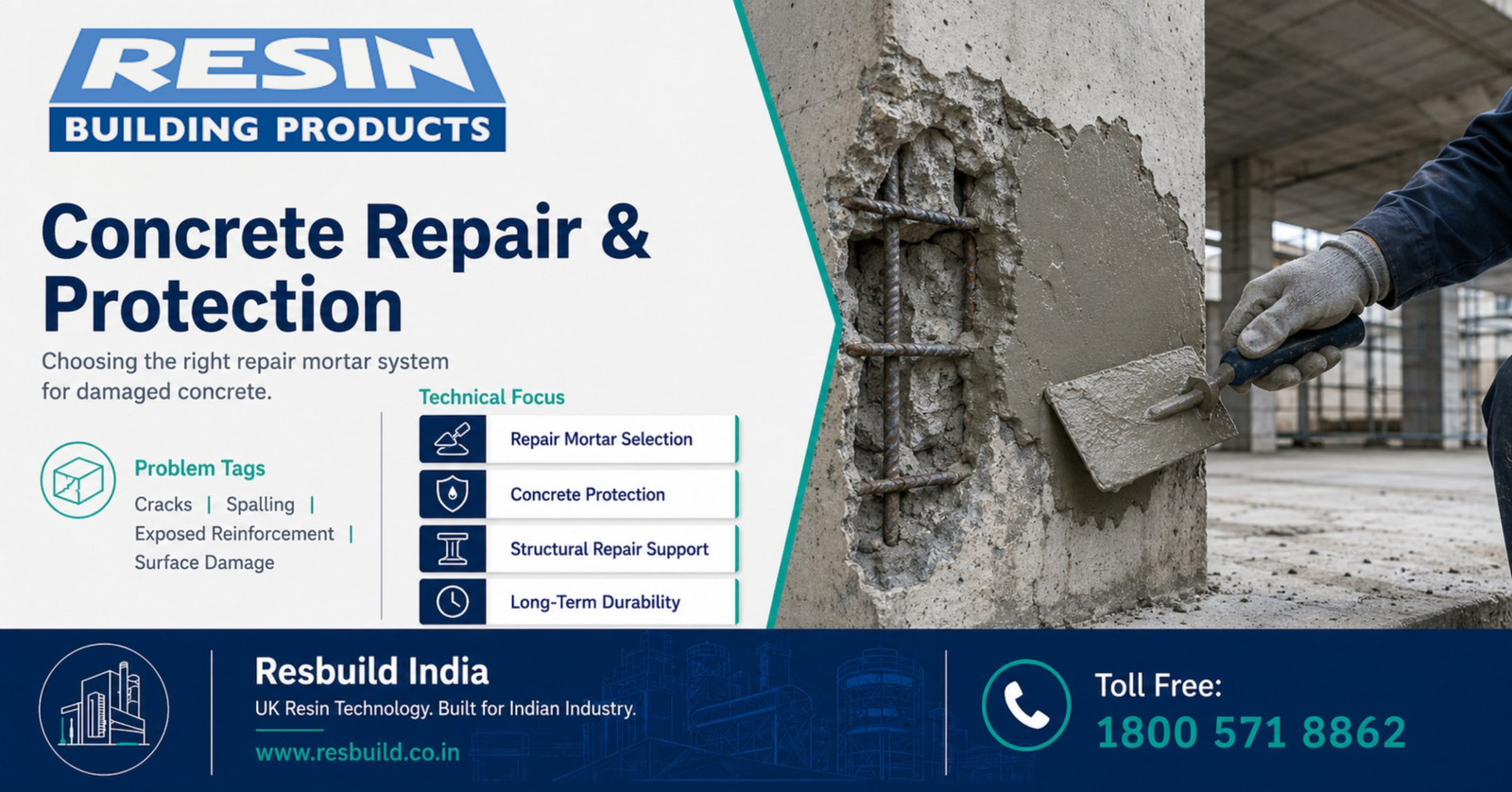
Concrete Repair & Protection: Choosing the Right Repair Mortar System
Concrete damage should not be treated as a cosmetic surface issue. Cracks, spalling, honeycombing, exposed reinforcement and weak concrete patches can develop into serious durability and structural repair concerns if the correct repair system is not selected.
In industrial, commercial and infrastructure projects, concrete is exposed to traffic, impact, vibration, chemicals, moisture, carbonation and weather conditions. A simple patch repair may temporarily cover the damaged area, but if the repair mortar is not compatible with the damage depth, exposure condition and substrate requirement, failure can occur again.
This is why repair mortar selection should be based on technical assessment, not guesswork.
Resbuild Concrete Repair & Protection systems are designed for repair, restoration and protection of damaged concrete surfaces, including cracks, spalling, weak patches, exposed reinforcement areas and industrial repair zones.
Why Concrete Repair Requires System Selection
Concrete repair is more than filling a damaged area. A complete repair system should restore the section, bond properly to the substrate, protect reinforcement, resist exposure conditions and support long-term durability.
Wrong product selection can lead to:
• Poor bond with old concrete
• Shrinkage cracks
• Patch failure
• Water ingress
• Reinforcement corrosion
• Edge debonding
• Surface dusting
• Repeat maintenance cost
• Reduced service life
To avoid these issues, the repair material must be selected based on damage type, depth, structural requirement and exposure condition.
Common Types of Concrete Damage
1. Cracks
Cracks can be caused by shrinkage, movement, overloading, settlement, thermal stress or structural distress. Before repair, it is important to identify whether the crack is active or dormant.
Hairline cracks, deep cracks and moving cracks may require different repair methods.
2. Spalling
Spalling occurs when concrete breaks away from the surface. It may happen due to reinforcement corrosion, water ingress, impact damage, carbonation or poor-quality concrete.
If spalling exposes reinforcement, the repair should include cleaning, treatment and protection of steel before applying repair mortar.
3. Honeycombing
Honeycombing creates voids and weak zones in concrete. These areas reduce durability and allow moisture ingress. Repair material should be selected based on the depth and location of the honeycombed area.
4. Exposed Reinforcement
When reinforcement becomes visible, corrosion risk increases. The repair process should include removal of loose concrete, steel cleaning, anti-corrosion treatment where required and proper repair mortar application.
5. Industrial Floor Damage
Industrial floors may suffer from cracks, impact damage, edge breakage, abrasion, chemical exposure or forklift traffic deterioration. These areas may need high-strength repair systems and protective topping or coating after repair.
Key Factors for Repair Mortar Selection
1. Damage Depth
Repair depth is one of the most important selection factors. Shallow surface defects, medium-depth repairs and deep patch repairs may need different repair mortar properties.
The repair system should match the required thickness and placement method.
2. Substrate Strength
Weak, dusty or unsound concrete will reduce bonding performance. Before repair, loose material should be removed until sound concrete is reached.
3. Bond Strength
A repair mortar must bond strongly to the existing concrete. Poor bonding can lead to hollow patches or detachment.
4. Shrinkage Control
Repair mortars should be selected to reduce shrinkage cracking, especially in patch repairs and larger surface repair areas.
5. Exposure Condition
Concrete exposed to moisture, chemicals, carbonation, chlorides, traffic or vibration needs a repair system suitable for that service environment.
6. Reinforcement Protection
Where steel is exposed, corrosion protection should be considered. Repairing only the concrete surface without addressing reinforcement condition may lead to repeated spalling.
7. Final Protection Requirement
Some repair areas may need protective coating after repair. Anti-carbonation coatings, chemical-resistant coatings or surface protection systems can help extend service life.
Resbuild’s concrete repair range includes repair mortars, crack fillers, structural repair products and protective coatings for restoring deteriorated structures and industrial floors. (resbuild.co.in)
Repair Mortar Selection by Application Area
Industrial Structures
Industrial structures may face vibration, chemical exposure, traffic and operational stress. Repair systems should be selected for high bond strength, durability and exposure resistance.
Parking Areas
Parking decks and ramps face vehicle movement, water ingress, abrasion and carbonation risk. Crack repair, spalling repair and protective coating may be needed.
Factories and Warehouses
Concrete floors in factories and warehouses are exposed to forklifts, pallets, abrasion and impact. Repairs should be durable and compatible with the final floor protection system.
Columns and Beams
Structural elements require careful assessment. Repair mortar should be selected based on load condition, reinforcement exposure and repair depth.
Water-Exposed Areas
Concrete exposed to moisture or water ingress should be repaired with a system that considers waterproofing and protective coating requirements.
Basic Concrete Repair Process
A good repair depends on correct application as much as correct product selection.
Step 1: Inspect the Damage
Identify crack type, spalling depth, reinforcement condition, moisture exposure and cause of damage.
Step 2: Remove Weak Concrete
Remove loose, unsound or contaminated concrete until a strong substrate is reached.
Step 3: Clean the Surface
The repair area should be free from dust, laitance, oil, grease and loose particles.
Step 4: Treat Reinforcement
If reinforcement is exposed, clean the steel and apply corrosion protection where required.
Step 5: Apply Bonding Layer or Primer
Some repair systems require a bonding layer or primer depending on product recommendation and substrate condition.
Step 6: Apply Repair Mortar
Apply the repair mortar in the recommended thickness and method. Ensure proper compaction and finishing.
Step 7: Cure and Protect
Follow recommended curing instructions. Apply protective coating if required for chemical, carbonation, weather or moisture protection.
Where Resbuild Concrete Repair & Protection Helps
Resbuild Concrete Repair & Protection systems support repair and protection requirements for:
• Concrete cracks
• Spalled concrete
• Exposed reinforcement zones
• Damaged columns and beams
• Industrial floor repair
• Structural patching
• Carbonation-affected concrete
• Chemical-exposed concrete
• Maintenance repair works
Resbuild India provides advanced concrete repair, rehabilitation and protection systems designed to restore deteriorated structures and industrial floors. (resbuild.co.in)
Resbuild India’s overall product portfolio includes concrete repair, waterproofing, engineering grouts, protective coatings, industrial flooring and surface treatments, supported by UK resin technology adapted for Indian industrial conditions. (resbuild.co.in)
Common Repair Mistakes to Avoid
• Applying repair mortar over weak concrete
• Not removing loose material properly
• Ignoring corrosion on exposed reinforcement
• Using one repair material for every damage depth
• Adding excess water during mixing
• Not following recommended thickness
• Skipping bonding layer where required
• Not curing the repair area properly
• Leaving repaired concrete unprotected in aggressive exposure
• Treating active cracks as simple surface cracks
Conclusion
Concrete repair should be handled as a system-based technical process. The correct repair mortar depends on damage depth, crack type, reinforcement exposure, substrate condition, load, vibration, moisture, chemical exposure and final protection requirement.
Using the wrong product may only hide the damage temporarily and lead to repeated failure.
Resbuild Concrete Repair & Protection systems support repair, restoration and protection of damaged concrete surfaces for industrial, commercial and infrastructure projects.
CTA Section
Need help selecting the right repair mortar system?
📞 Contact Resbuild India: 1800 571 8862
🌐 Visit: https://resbuild.co.in/resbuild-concrete-repair
Request TDS/SDS, site consultation or technical product guidance.
Resbuild India
UK Resin Technology. Built for Indian Industry.
FAQs
1. How do I choose the right repair mortar for concrete damage?
Repair mortar should be selected based on damage depth, substrate condition, exposure environment, reinforcement condition, load and final protection requirement.
2. What causes concrete spalling?
Concrete spalling can occur due to reinforcement corrosion, water ingress, carbonation, chemical exposure, impact damage or poor-quality concrete.
3. Can cracks and spalling be repaired with the same product?
Not always. Crack repair and spalling repair may require different systems depending on crack movement, depth and structural condition.
4. Why does concrete repair fail?
Concrete repair may fail due to poor surface preparation, wrong product selection, weak substrate, corrosion not treated, shrinkage cracking, insufficient curing or lack of final protection.
5. Does Resbuild India provide concrete repair product guidance?
Yes. Resbuild India provides technical guidance for selecting suitable repair and protection systems for cracks, spalling, exposed reinforcement and damaged concrete surfaces.